Employee Rewards and Motivation in Non Profit Organisations: Case Study from Australia
- John Tippet
- Ron Kluvers
Abstract
This paper is a study designed to understand how intrinsic rewards, as compared with extrinsic rewards, are perceived as sources of motivation by staff of NFP organisations.Data was gathered through a survey featuring a number of statements about intrinsic and extrinsic rewards. The small-sample t-test was used to determine the significance of responses, and hence test the hypothesis that employees are motivated by intrinsic rewards.
The findings of the study are that significant t-test p-values highlighted intrinsic rewards – in particular, the achievements of employees’ clients, work/life balance, and having fun at work – as being important staff motivators.
- Full Text:
 PDF
PDF
- DOI:10.5539/ijbm.v4n3p7
 This work is licensed under a Creative Commons Attribution 4.0 License.
- ISSN(Print): 1833-3850
- ISSN(Online): 1833-8119
- Started: 2006
- Frequency: bimonthly
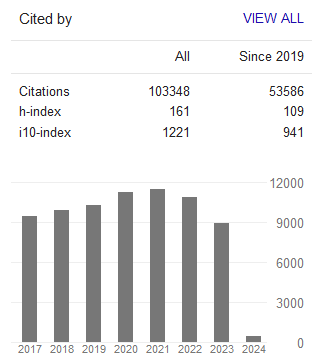
Journal Metrics
Google-based Impact Factor (2023): 0.86
h-index(2023): 152
i10-index(2023): 1168
Index
- Academic Journals Database
- AIDEA list (Italian Academy of Business Administration)
- ANVUR (Italian National Agency for the Evaluation of Universities and Research Institutes)
- Berkeley Library
- CNKI Scholar
- COPAC
- EBSCOhost
- Electronic Journals Library
- Elektronische Zeitschriftenbibliothek (EZB)
- EuroPub Database
- Excellence in Research for Australia (ERA)
- Genamics JournalSeek
- GETIT@YALE (Yale University Library)
- IBZ Online
- JournalTOCs
- Library and Archives Canada
- LOCKSS
- MIAR
- National Library of Australia
- Norwegian Centre for Research Data (NSD)
- PKP Open Archives Harvester
- Publons
- Qualis/CAPES
- RePEc
- ROAD
- Scilit
- SHERPA/RoMEO
- Standard Periodical Directory
- Universe Digital Library
- UoS Library
- WorldCat
- ZBW-German National Library of Economics
Contact
- Stephen LeeEditorial Assistant
- ijbm@ccsenet.org